


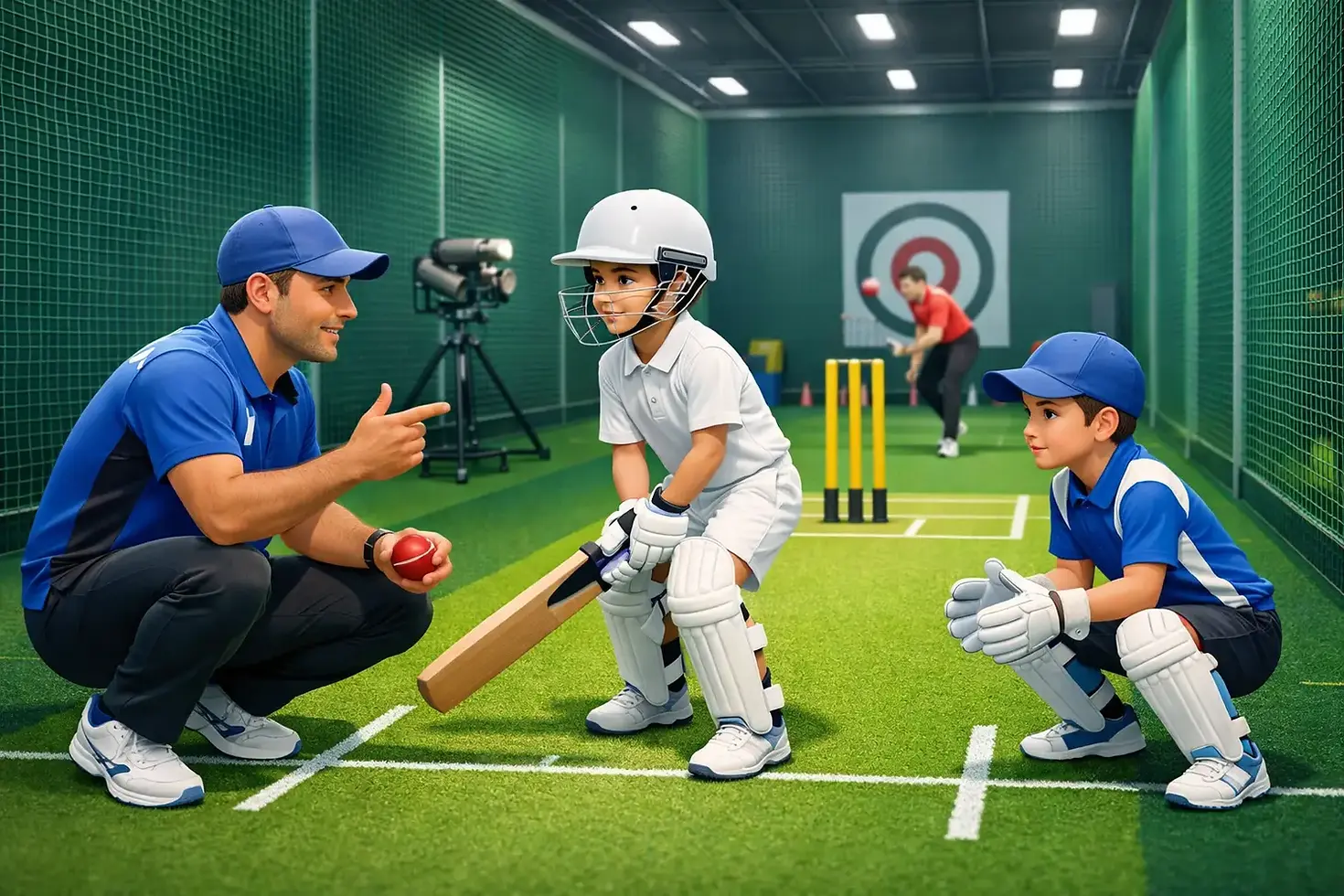
Best Age to Start Cricket Coaching?

A seven-year-old who loves batting in the backyard does not need the same coaching as a fourteen-year-old chasing representative cricket. That is why the question of the best age to start cricket coaching matters - but not in a one-size-fits-all way. The right starting point depends less on a single number and more on readiness, interest, movement quality and the type of coaching being introduced.
For families, the goal should not be to start as early as possible. It should be to start at the age where coaching adds structure without stripping away enjoyment. For players with bigger ambitions, early exposure to sound habits can make a real difference, but only if the training matches the athlete’s stage of development.
What is the best age to start cricket coaching?
For most junior players, a good window to begin cricket coaching is between 6 and 9 years old. At that age, children are usually ready to follow simple instructions, repeat basic skills and build coordination through structured drills. They can start learning how to grip the bat properly, move into position, bowl with safer mechanics and develop balance, timing and catching technique.
That said, starting earlier is not automatically better. A five-year-old may benefit from fun, movement-based cricket sessions, but heavy technical correction at that age is often unnecessary. On the other hand, starting at 10, 12 or even later is far from a disadvantage if the coaching is clear, consistent and suited to the player’s goals.
The stronger question is not simply, how old is the player? It is, are they ready for coaching that is structured, age-appropriate and designed to build good habits over time?
Why age matters less than readiness
In cricket development, readiness shows up in a few practical ways. A junior who can listen, reset after mistakes and stay engaged through a session is often ready to benefit from formal coaching. So is a player who genuinely wants to improve, rather than being pushed into extra training before they are interested.
Physical readiness matters as well. Young players are still learning how to move efficiently. Before advanced batting or bowling work, they need basic athletic foundations such as balance, coordination, posture and rhythm. This is where quality coaching can help early, not by overloading the player, but by teaching clean movement patterns from the beginning.
Emotional readiness is just as important. Some children thrive in a coaching environment at six. Others are better off playing socially for another year or two before stepping into a more structured program. Good development does not come from rushing the process.
The best age to start cricket coaching by stage
Ages 5 to 7
This is the introduction stage. Coaching should be simple, active and built around enjoyment. Players in this age group benefit from learning basic batting stance, hand-eye coordination, throwing technique and catching confidence. Sessions should keep them moving and avoid long explanations.
If a child at this age loves the game and responds well to instruction, coaching can be a strong foundation. If they are still developing attention and confidence, the focus should remain on fun and broad skill exposure rather than performance outcomes.
Ages 8 to 10
This is often an ideal stage for structured junior coaching. Players can usually absorb more detail, repeat drills with purpose and begin understanding game situations. It is a strong age to build core batting and bowling mechanics before poor habits become ingrained.
For many families, this is where coaching starts to deliver visible returns. Technique becomes more stable, movement patterns improve and players gain confidence from clearer feedback. It is also a good age to introduce training discipline without making cricket feel like work.
Ages 11 to 13
This is a key development period. Players are often competing more regularly, school and club cricket becomes more meaningful, and technical flaws begin to show under pressure. Coaching at this stage can have a major impact because athletes are old enough to understand correction but still young enough to reshape habits efficiently.
This is also the age where bowlers need careful technical guidance. Workload, action efficiency and body alignment matter more as pace and intensity increase. Batters, meanwhile, benefit from learning not just strokes, but decision-making, shot selection and game awareness.
Ages 14 and up
Players can absolutely start coaching in their teens and still make strong progress. In fact, many committed players only begin serious technical work once they decide they want more from the game. The main difference is that older athletes may need to spend time correcting habits that have been repeated for years.
At this stage, coaching often becomes more specialised. A player may need one-to-one batting work, bowling analysis, strength around their action, or structured indoor sessions that remove weather and surface inconsistencies from the equation. Improvement is still very achievable, but the process is usually more targeted.
When early coaching helps most
Early coaching is especially valuable when it prevents bad habits from becoming normal. A young batter who learns balanced setup and head position early is generally easier to develop later than one who has spent four seasons falling across the crease. The same applies to bowlers with unstable run-ups, poor front-arm use or actions that place unnecessary stress on the body.
It also helps when the training environment is controlled. Indoor coaching can be particularly useful for juniors because repetition is easier to manage, feedback is more immediate and players are not losing sessions to weather. In a structured academy setting, players can build skill consistency across the year rather than relying on a short summer window.
Still, there is a trade-off. If coaching becomes too intense too early, players can lose their enjoyment of the game. The best junior programs keep standards high while protecting motivation.
Signs a child is ready for cricket coaching
Parents often ask whether their child is too young, too raw or too far behind. In most cases, the better indicator is behaviour rather than age. A player is usually ready when they show interest in learning, can participate for a full session, and respond reasonably well to simple instruction and repetition.
Another sign is frustration with their current level. If a child enjoys cricket but is starting to notice they struggle to make contact, bowl straight or catch cleanly, coaching can turn that frustration into progress. The right program gives them a framework to improve instead of guessing their way through matches.
For older juniors and teens, readiness often looks like commitment. They want extra reps. They ask questions. They care about performance. That is where structured coaching can shift from general development to genuine pathway building.
Choosing the right type of coaching at the right age
Not all coaching is equal, and age should influence format as much as timing. Younger players usually benefit most from junior group sessions where learning is active, social and built around fundamentals. As players get older or more serious, one-to-one coaching becomes more useful because technical issues can be addressed in detail.
For developing bowlers, specialist sessions are often important earlier than families expect. Bowling is a complex skill with physical demands, and technical inefficiencies can limit both performance and durability. For batters, video feedback can become valuable once they are old enough to understand how movement patterns affect outcomes.
This is where a dedicated indoor cricket development centre offers a clear advantage. Qualified coaches, full run-up lanes, bowling machines and structured feedback make it easier to match the training to the player’s age and stage. For families in Melbourne’s west and south-east, that matters when the goal is not just extra practice, but measurable development.
The wrong age to start is usually the age that feels forced
There is no perfect universal age, and that is exactly the point. Some players should start with formal coaching at six. Others are better beginning at nine or ten. Some teenagers arrive later, switch on, and improve quickly because they are finally ready to train with purpose.
The best age to start cricket coaching is the age where the player can enjoy structure, absorb feedback and build habits that support long-term progress. Start too late and you may spend more time correcting than building. Start too early, in the wrong environment, and you risk draining enthusiasm.
If you get the balance right, coaching becomes more than extra nets. It becomes a development pathway - one that gives young players the technique, discipline and confidence to move forward with intent.
A good starting age is helpful. A good coaching environment is what turns that timing into real improvement.


Comments