


Indoor Cricket Coaching Melbourne That Builds Players

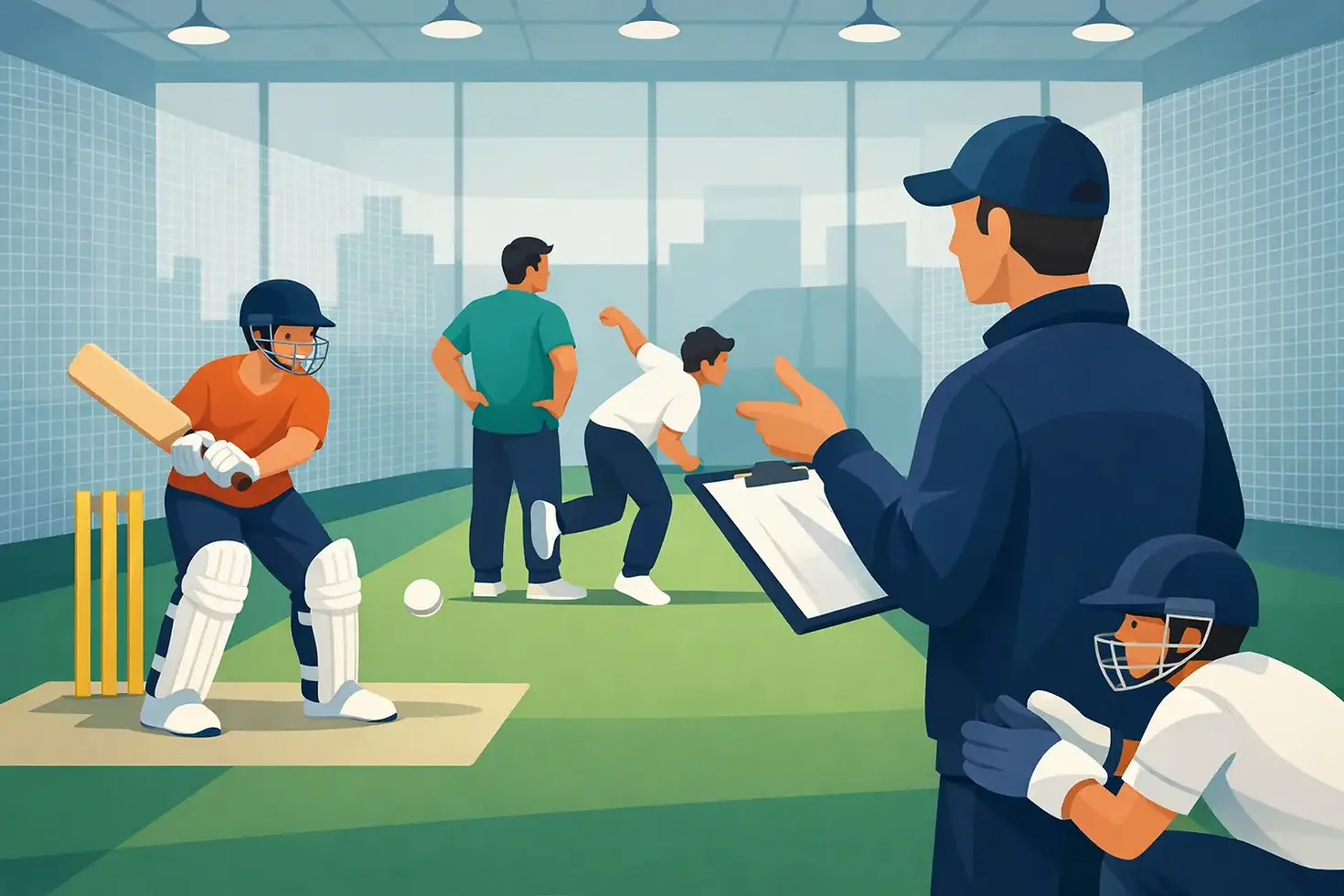
When a player is serious about improving, random net sessions stop being enough. Indoor cricket coaching Melbourne families choose for real development needs to offer more than a lane and a bucket of balls - it needs structure, qualified coaching and a training environment built for progression.
That matters whether the goal is cleaner batting mechanics, better bowling loads, stronger wicketkeeping habits or simply more consistent preparation through winter and wet weeks. Good indoor coaching removes variables. It gives players a controlled space to train with intent, review their technique and build habits that carry into matches.
What makes indoor cricket coaching in Melbourne effective?
The biggest difference is not being indoors. It is what happens inside the facility. A strong indoor program is designed around skill development, not casual access. Players should be working with coaches who can identify technical issues early, set clear training objectives and measure improvement over time.
For juniors, that often means learning correct movement patterns before poor habits settle in. For teenage players and club cricketers, it usually becomes more specific - batting against pace, improving front-arm position, building a repeatable run-up, or learning how to train with purpose rather than just getting through volume.
Facility quality matters as well. Long lanes allow bowlers to use a full run-up instead of shortening their action to suit the space. Bowling machines help with repeatable ball feeds, but they are most useful when paired with coaching direction. Video analysis can sharpen feedback, especially for players who need to see their setup, release point or bat path to understand what needs to change.
In Melbourne, where weather can interrupt outdoor training for long stretches, indoor cricket coaching also helps players stay consistent. Consistency is a major part of development. Missing weeks of quality practice can slow progress quickly, particularly for younger players still building their technical base.
Who benefits most from indoor cricket coaching Melbourne programs?
The short answer is almost any player who wants more than unstructured practice. The better question is what type of support they need.
Junior cricketers often benefit from early exposure to structured coaching because it builds sound fundamentals. Grip, stance, balance, alignment and basic decision-making are easier to teach properly before match pressure and habits take over. Players at this stage do not need complexity. They need clarity, repetition and coaches who can keep standards high without making training feel inaccessible.
Teenage players usually need a different layer of development. This is where training becomes more performance-focused. Batters may need help converting net work into game plans. Bowlers may be managing pace, control and workload. Players competing for school, club or representative opportunities often need an environment that reflects those demands.
Girls' cricket is another area where dedicated indoor programs can make a genuine difference. High-performance development in a focused setting gives players the chance to train seriously, receive tailored feedback and build confidence in a space designed around progression rather than token inclusion.
Adults and committed club cricketers also gain plenty from indoor coaching, especially when they are trying to correct specific issues. A player who keeps nicking off, loses shape under pressure or struggles to maintain bowling rhythm can improve much faster when sessions are targeted instead of generic.
One-to-one coaching versus group sessions
This is where a lot of families and players weigh value against need. Both formats can work well, but they serve different purposes.
One-to-one coaching is best for specific technical work and faster correction. Because the coach's attention is fully on one player, feedback is immediate and sessions can be tailored to current challenges. If a batter is falling across the crease or a bowler's wrist position is costing swing and control, individual coaching usually gets to the issue quicker.
Group coaching has different strengths. It builds training habits, competition, energy and social connection. For juniors especially, group environments can be excellent for learning while still feeling part of a development squad. Group sessions also suit families looking for regular, structured coaching without the cost of private lessons every week.
It depends on the player. Some need a block of one-to-one sessions to correct a clear issue, then maintain progress through group training. Others thrive in a pathway program where individual feedback sits within a broader academy structure.
Why serious players look for pathway-based coaching
Not all coaching is equal because not all coaching has the same objective. Casual net hire has its place, but pathway-based indoor cricket coaching is designed around longer-term player development.
That means players are not just turning up to hit balls or bowl overs. They are working within a system. Coaches track progress, identify priorities and build sessions that connect to the next stage of development. For some players, that is moving from junior cricket into stronger club competition. For others, it may be preparing for representative trials, school commitments or higher-performance opportunities.
A pathway model also helps families understand where their child sits and what comes next. That is especially valuable when a player is enthusiastic but still developing physically or technically. Progress in cricket is rarely linear. A structured academy setting helps keep expectations realistic while still pushing standards upward.
The role of technology in indoor cricket development
Technology should support coaching, not replace it. Bowling machines, video review and digital training systems are useful because they create repeatable conditions and clearer feedback.
A bowling machine can help a batter train against volume, pace and specific lengths without relying on whatever is available on the night. That matters when a player is working on back-foot play, getting inside the line, or preparing for short-pitched bowling. But machine work without purpose can become empty repetition. The coaching cue still matters.
Video analysis is often where players make the biggest leap in understanding. Many athletes do not feel what they are actually doing. A batter may think their head is still when it is drifting. A bowler may feel aligned when their front side is opening early. Seeing those moments changes how feedback lands.
In a well-run indoor environment, technology speeds up learning. It does not make the session more impressive for the sake of it. It helps players connect technique, movement and outcome.
What to look for in a Melbourne indoor cricket centre
If you are comparing indoor cricket coaching Melbourne options, look beyond convenience alone. Location matters, but development quality matters more.
Start with the coaching team. Are the coaches qualified, experienced and able to work across different ages and skill levels? A strong coach can simplify a problem, communicate clearly and keep training standards consistent.
Then look at the facility itself. Long indoor lanes are a major advantage, particularly for bowlers who need full run-up practice. Court access, modern bowling machines and space for technical work all add value, but only when the environment is organised around actual player development.
Program structure is another useful test. Does the centre offer one-to-one sessions, junior groups, high-performance pathways and practical booking options for independent practice? A serious academy should be able to support players at different stages instead of forcing everyone into the same format.
For families in Melbourne's west and south-east, access also matters. Having strong indoor cricket development available in areas such as Hoppers Crossing and Pakenham makes consistent training far more realistic across a full season.
Why indoor coaching works best when standards stay high
The best indoor cricket environments are welcoming, but they are not casual about standards. Players improve faster when sessions are organised, expectations are clear and effort is matched with specific feedback.
That does not mean every session needs to feel intense. It means every session should have a point. A junior player learning to defend straight. A fast bowler refining load-up and alignment. A school cricketer preparing for trials with targeted batting work. Progress comes from repetition with direction.
That is where an academy model stands apart. At Elite Cricket Academy and Sports Gear Pty Ltd, the value is not simply indoor access. It is the combination of qualified coaching, long 38-metre lanes, video-supported feedback, bowling machine technology and structured programs that treat development as an ongoing process.
For players who want to improve, the right environment changes everything. Talent helps, but training quality shapes how far that talent can go. If you are choosing indoor coaching, choose a place where each session builds on the last and where better habits are trained on purpose. That is how players move from practice to performance.


Comments